From interview to article: what you get when the conversation ends
When you end a Mind Pencil interview, your answers are distilled and written up as a long-form English article. What is in it, how it is made, and what you can do with it.
October 4, 2026 · 6 min read
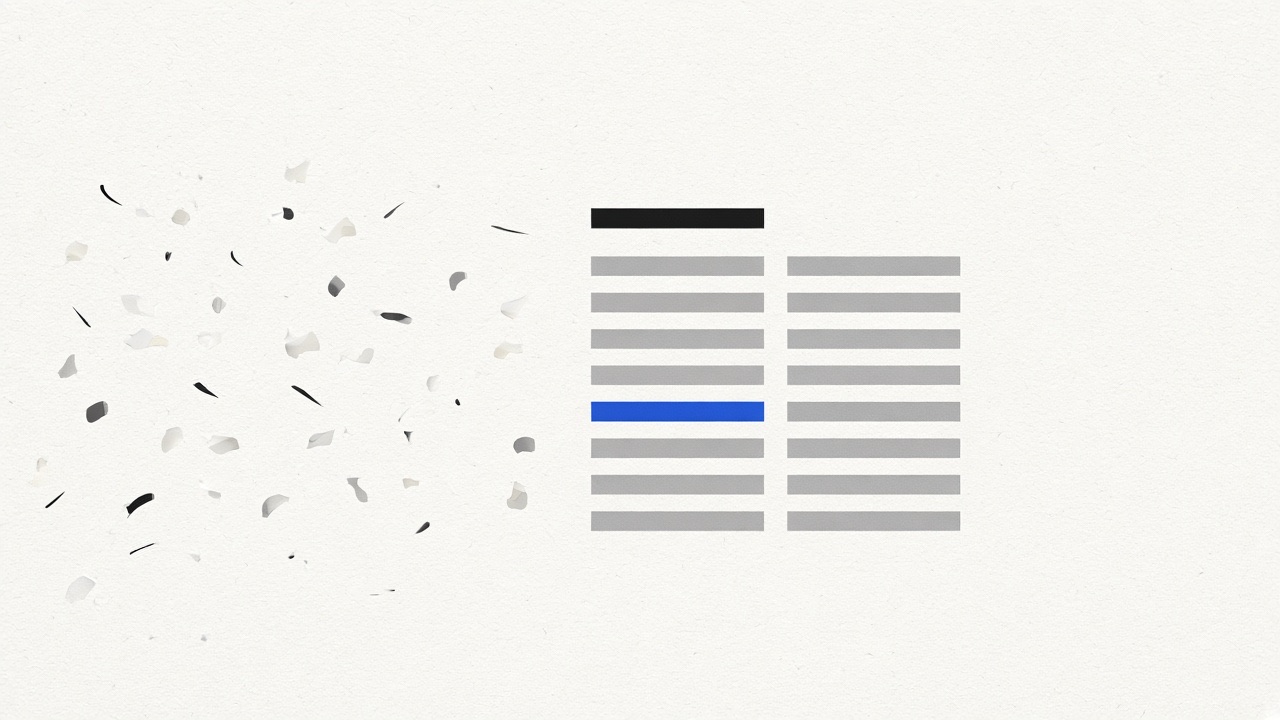
When you end the interview, Mind Pencil turns the conversation into a long-form feature article in English, written from your own answers. The first draft is included in the $19.99 price. The article appears on the interview page, the full transcript stays available with it, and you can copy the article or download it as a Markdown file.
How does a conversation become an article?
In three passes, after you press End interview:
- Gather the material. The transcript is read for the substance: short summaries, quotable lines, and recurring themes.
- Find the through-line. Those pieces are condensed into a brief synthesis of what the conversation is really about.
- Write. A feature article on your topic is drafted from the synthesis and the material, grounded in what you said in the transcript.
Separating the steps is what keeps the article from following the order the questions happened to come in. The structure follows the argument instead.
What does the finished article contain?
- A title and an opening that sets up what the piece is about.
- Continuous long-form prose, not a list of bullet points or interview questions.
- Your stories, numbers, and turns of phrase, placed where they carry the argument.
Will it sound like me?
The words that matter come from you. In the example on the Mind Pencil page, a potter says she kept buying clay on weekends until Monday started to feel like the interruption. The article opens on that line:
For years, Monday was the interruption. The real work happened on Saturdays, at a borrowed wheel, with clay drying under her fingernails.
The observation is hers. The article's job was to notice it and build around it. The more specific your answers, the more of you ends up on the page.
Does the article make things up?
It is written from the transcript and does not research outside it, so it has no other source for your story. Still, treat it as a first draft. Before you publish, check names, dates, and figures against what you meant, the same way you would check any piece written from an interview.
What can I do with the article?
Copy the text and paste it into your editor, or download it as a Markdown (.md) file that opens in any text editor. Under the Vidda Studio Terms of Service, you keep the rights to your own inputs and to the article generated for you, so you can publish it on your blog, newsletter, or company site.
What if I want a different version?
Order a rewrite for $5.99. It drafts a fresh version from the same interview, so you do not answer any questions again. You can order more than one, and a rewrite that fails or never starts is refunded.
What does it cost, and when is it refundable?
- $19.99 per interview, with the first draft of the article included.
- A full refund until you answer the first question.
- A full refund if the interview is finished but the article cannot be generated.
- Rewrites are $5.99 each, only if you want one.
You bring the insight. The article keeps up. $19.99, first draft included.
MORE NOTES
How to choose a subject for an article about your own experience
Pick something you have lived, not something you would have to research. A simple test, subjects that work and subjects that fall flat, and how to phrase the topic so the interview starts well.
Should you speak or type your interview answers?
Both work, and you can switch on every answer. When voice helps, when typing is better, and the limits worth knowing before you start.